
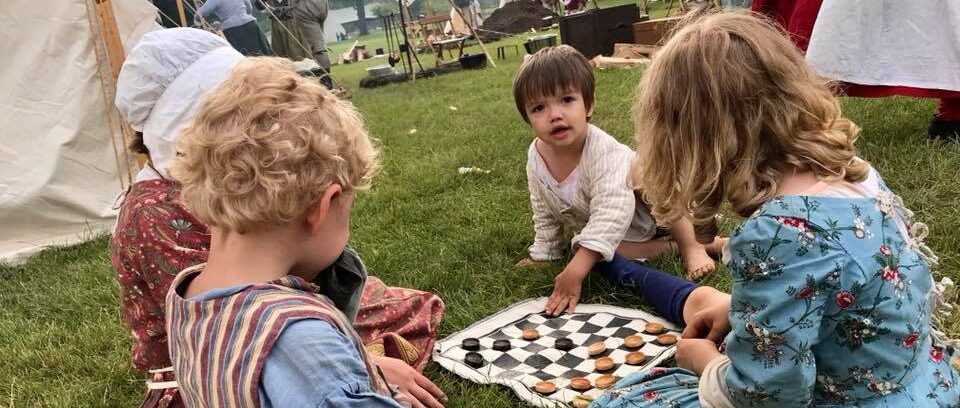
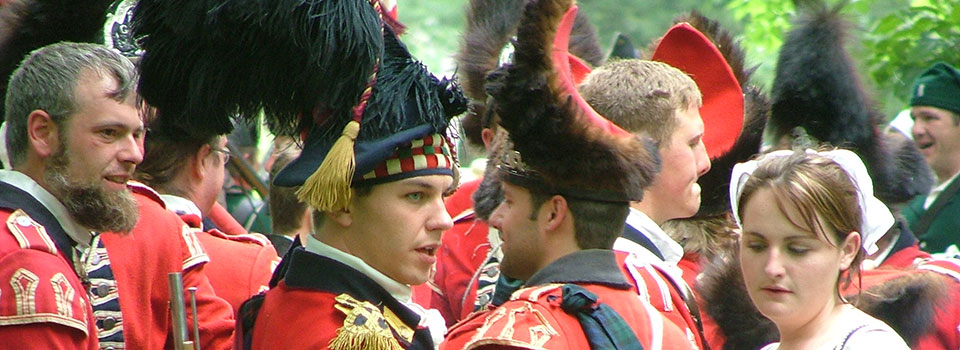
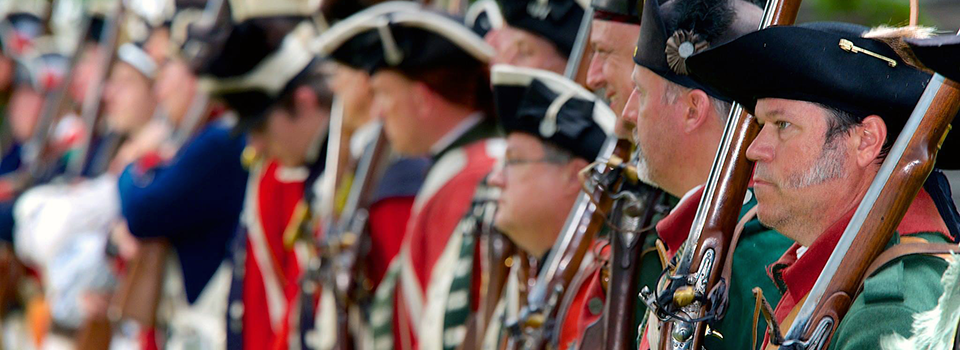
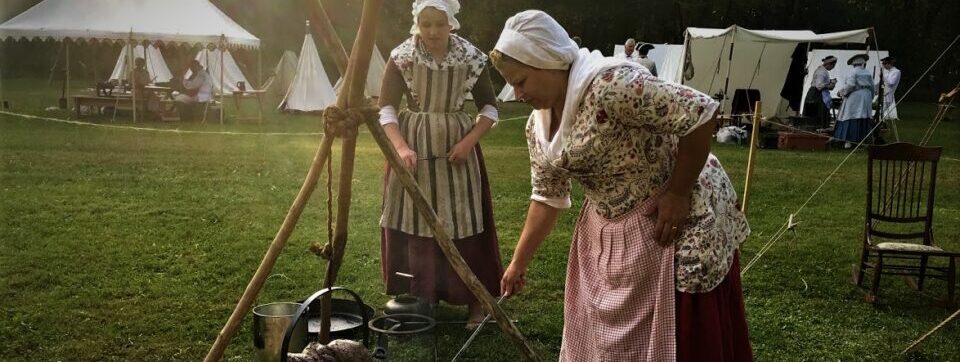
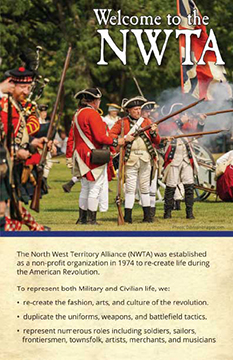
The North West Territory Alliance (NWTA) is an American Revolutionary War reenactment organization located in the Midwestern United States. We have over five hundred members from states as far west as Iowa, east to Ohio, North to the Canadian border, and south to Tennessee.

We are a non-profit educational organization that studies and recreates the culture, lifestyle, and arts of the time of the American Revolution, 1775-1783. We strive to duplicate the uniforms, weapons, battlefield tactics, and camp life of the era as accurately as possible.

Comments Box SVG iconsUsed for the like, share, comment, and reaction icons

February 14, 1777, the U.S. Congress commissioned Benjamin Lincoln as a major general in the Continental Army, acting on recommendations from General George Washington. Previously a Massachusetts militia officer, Lincoln was elevated to boost the recruitment of New Englanders and was subsequently assigned to command, including a tenure at Bound Brook, NJ.
Key details about Benjamin Lincoln's appointment and service:
Commission Date: February 14, 1777 (with some sources citing February 19, 1777, for the formal appointment alongside other generals).
Following his promotion, he served under Washington in New Jersey before being sent to assist General Philip Schuyler in upstate New York.
Lincoln was highly regarded by Washington for his skills in organization and working with militia, and he played a major role in the Saratoga campaign, though he was severely wounded in October 1777.
He later served as the commander of the Southern Department, led the American forces at the Siege of Yorktown, and served as the first Secretary at War.
... See MoreSee Less

February 14, 1777, the U.S. Congress commissioned Benjamin Lincoln as a major general in the Continental Army, acting on recommendations from General George Washington. Previously a Massachusetts militia officer, Lincoln was elevated to boost the recruitment of New Englanders and was subsequently assigned to command, including a tenure at Bound Brook, NJ. Key details about Benjamin Lincolns appointment and service: Commission Date: February 14, 1777 (with some sources citing February 19, 1777, for the formal appointment alongside other generals). Following his promotion, he served under Washington in New Jersey before being sent to assist General Philip Schuyler in upstate New York. Lincoln was highly regarded by Washington for his skills in organization and working with militia, and he played a major role in the Saratoga campaign, though he was severely wounded in October 1777. He later served as the commander of the Southern Department, led the American forces at the Siege of Yorktown, and served as the first Secretary at War.
Today’s funny:

Comment on Facebook

Did the other one ask “why, mine ain’t broken”?

Not every conflict during the Revolution took place in North America.

The Great Siege of Gibraltar ends today February 7 1783

The longest siege endured by the British Armed Forces and one of the longest sieges in history, the battle at Gibraltar was one part of the American War of Independence. Britain controlled Gibraltar, having seized it from Spain, and both the French and the Spanish saw an opportunity to inflict damage on Britain and recover colonial possessions.

The siege began in 1779 when Spain blockaded the colony, but it failed when British ships were able to get through the lines. A Spanish attempt to attack was defeated by a British assault in 1781, after which the French entered to assist their allies. A final 'grand assault' was planned by the French and Spanish, and took place on September 18, 1782, but was a catastrophic failure; 60,000 men could not defeat the 5,000 defenders. Newly invented 'floating batteries', a type of ship, were also unable to break the defenders and were sunk.

On February 7, 1783, the siege was ended after a British convoy was able to slip through the blockade. The victory was decisive for the British, even though the War of Independence was a victory overall for the Americans and their allies.
... See MoreSee Less

Not every conflict during the Revolution took place in North America. The Great Siege of Gibraltar ends today February 7 1783 The longest siege endured by the British Armed Forces and one of the longest sieges in history, the battle at Gibraltar was one part of the American War of Independence. Britain controlled Gibraltar, having seized it from Spain, and both the French and the Spanish saw an opportunity to inflict damage on Britain and recover colonial possessions. The siege began in 1779 when Spain blockaded the colony, but it failed when British ships were able to get through the lines. A Spanish attempt to attack was defeated by a British assault in 1781, after which the French entered to assist their allies. A final grand assault was planned by the French and Spanish, and took place on September 18, 1782, but was a catastrophic failure; 60,000 men could not defeat the 5,000 defenders. Newly invented floating batteries, a type of ship, were also unable to break the defenders and were sunk. On February 7, 1783, the siege was ended after a British convoy was able to slip through the blockade. The victory was decisive for the British, even though the War of Independence was a victory overall for the Americans and their allies.

Comment on Facebook

That relieving British fleet sailed from Brest, where it was bottling up a French fleet in 1781. The fleet that ultimately led to the British loss at Yorktown and thus the war!

On February 4, 1789, the first U.S. Electoral College unanimously elected George Washington as the first President with 69 votes, while John Adams became Vice President with 34 votes, the second-highest total. Electors from 10 of the 11 ratified states participated, as New York failed to appoint electors in time, and North Carolina and Rhode Island had not yet ratified the Constitution.
This first election was authorized by the Confederation Congress in 1788 after the Constitution was ratified, with electors casting their ballots in their respective states before they were counted by Congress.
... See MoreSee Less

On February 4, 1789, the first U.S. Electoral College unanimously elected George Washington as the first President with 69 votes, while John Adams became Vice President with 34 votes, the second-highest total. Electors from 10 of the 11 ratified states participated, as New York failed to appoint electors in time, and North Carolina and Rhode Island had not yet ratified the Constitution. This first election was authorized by the Confederation Congress in 1788 after the Constitution was ratified, with electors casting their ballots in their respective states before they were counted by Congress.Image attachment
Load more

Upcoming Events